This past month, the critically acclaimed Netflix series “Stranger Things,” created by Matt and Ross Duffer, reached the climactic conclusion to its 5th and final season. Mixed reviews accompanied the cultural phenomenon, and although many people were not pleased with what The Duffer Brothers had to offer this time around, one thing nearly everyone could agree on was the incredible use of music throughout the show's lifetime.
“Music has a way of finding you, even in the darkest of places,” said Max Mayfield, played by Sadie Sink in “Stranger Things.”
As we follow the people of Hawkins, music is used as much more than a background element, establishing itself as an integral part of the story as early as the second episode of the series. During exposition after the disappearance of Will Byers, one of the main kids featured in the series, we see him and his older brother Jonathan during a fight between their parents. In a moment of close connection between the two, Jonathan shares his favorite song “Should I Stay or Should I Go” by The Clash with Will, distracting him from the chaos in the other room.
It’s not until season 4 where music takes hold as a key plot point. This season we’re introduced to a “Dark Wizard” that the kids call “Vecna”. The main conflict involves Vecna’s killing-spree, with one of the show’s main kids, Max, as his next victim. In Episode 4, “Dear Billy,” we get to see the true power of music. While trying to find clues about the history of Vecna, two of the older teens, Robin and Nancy, sneak into Pennhurst Asylum impersonating academic scholars. While getting a tour of the facility from the warden, he reveals music to be one of their main treatments, saying “music can reach parts of the brain the world can’t.” This revelation ends up being a lifeline for Max later in the episode. While Nancy and Robin are at Pennhurst, Max and the others go to the graveyard so she can say all she wishes she could’ve to her late brother. While reading the letter she falls into a trance that the others can’t wake her from. With information relayed from the others, they try as a last-ditch effort to play Max’s favorite song “Running Up That Hill” by Kate Bush on her Walkman. She begins to levitate, similar to Vecna’s other victims, but through her connection to the song she is able to break free from Vecna's control and escape his mindscape.
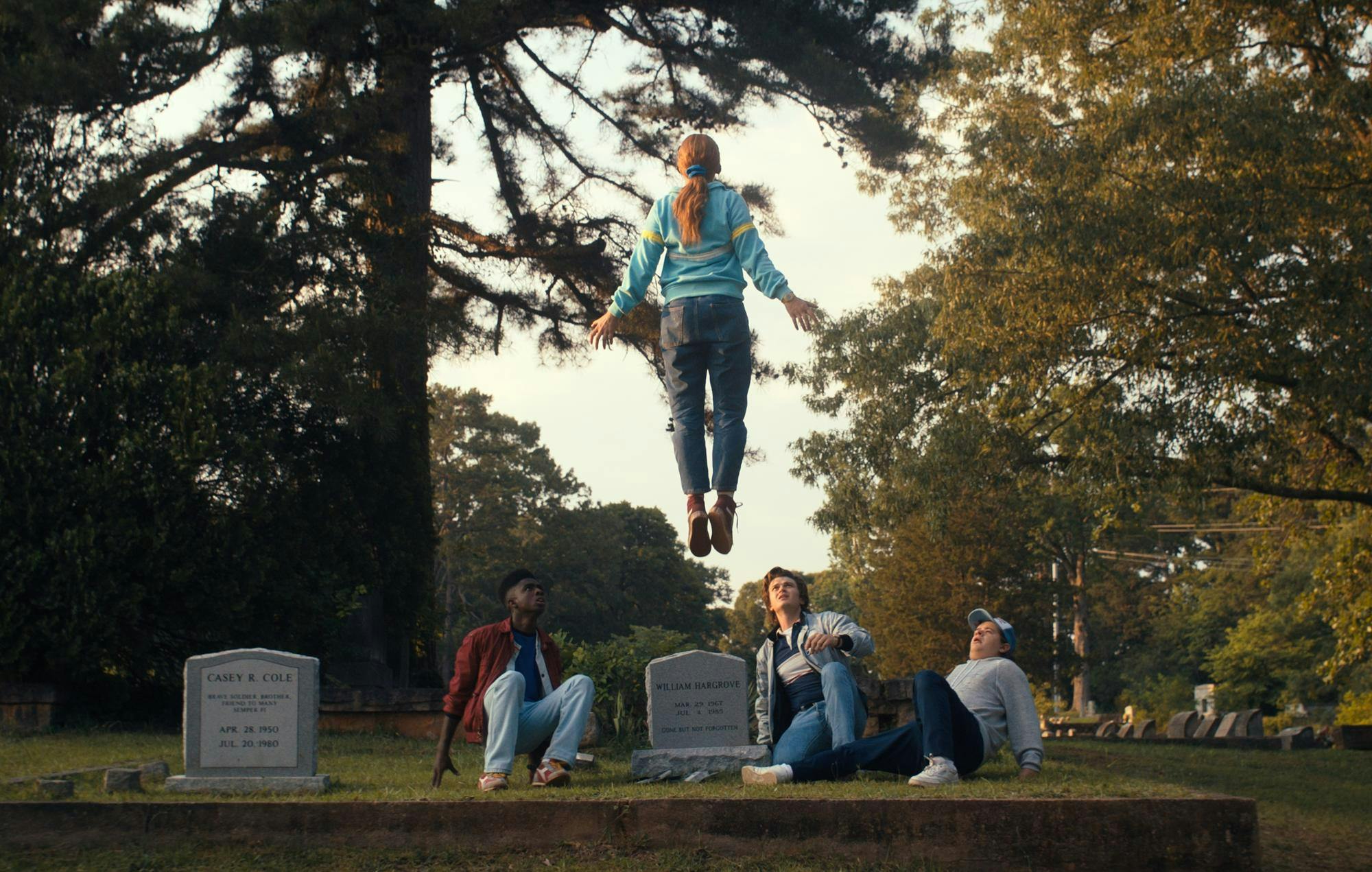
STRANGER THINGS (L to R) Caleb McLaughlin as Lucas, Sadie Sink as Max, Joe Keery as Steve, Gaten Matarazzo as Dustin in STRANGER THINGS. Cr. Courtesy of Netflix © 2022
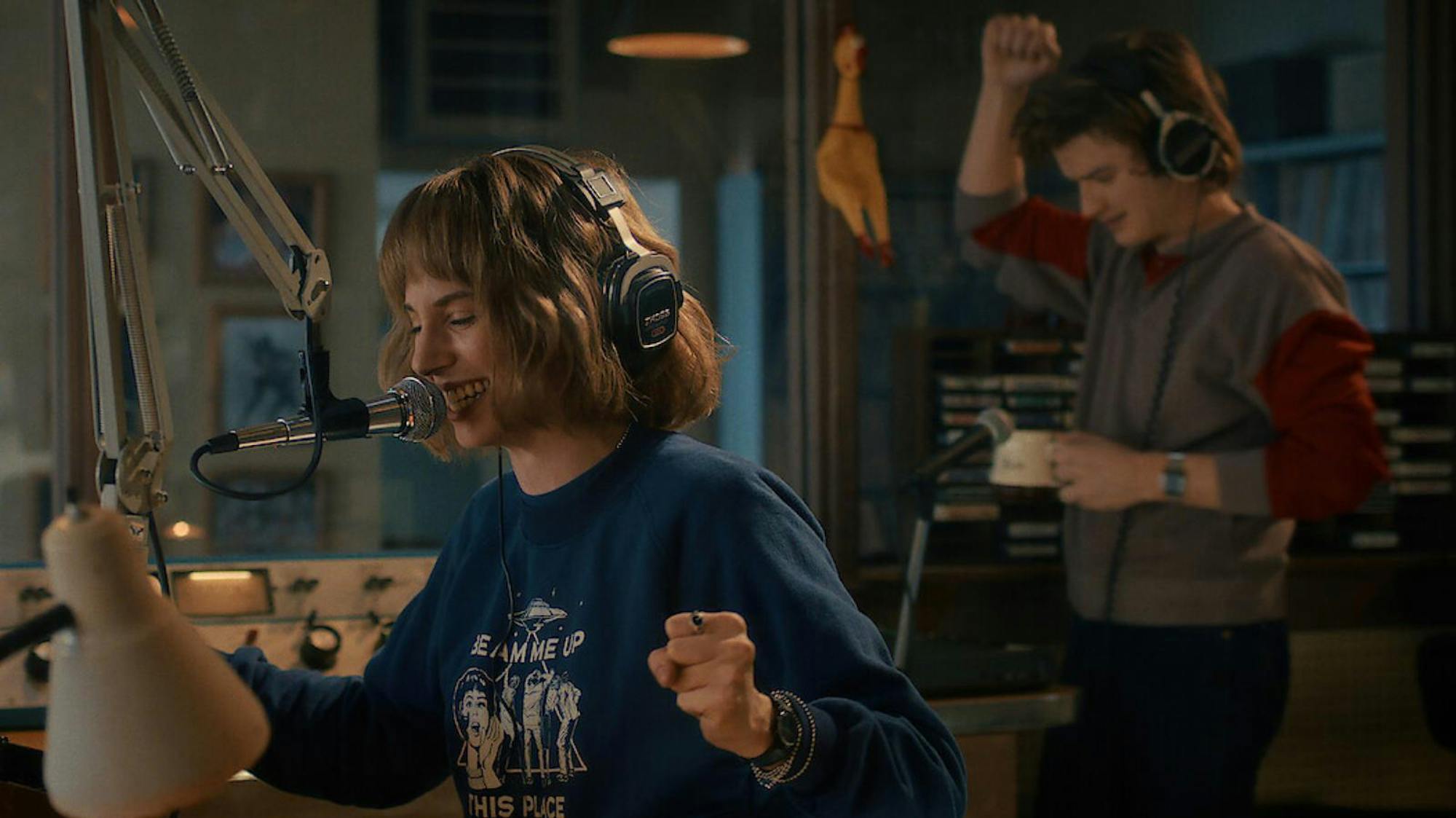
Later in season 5, music takes a much more realistic role in the story. One of the new set pieces this season is the WSQK radio station. This serves as a way for the host “Rockin’ Robin” to relay information to the town and is the main headquarters for the gang. In her broadcasts, she delivers secret messages to the Hawkins group in the form of songs, in order for them to intercept military operations in town. In the actual show, we see her encode messages through the song “Upside Down” by Diana Ross Along with this as part of a promotional campaign with Spotify, a WSQK themed playlist was created including Maya Hawke as her character Robin encoding messages in songs like “Fernando” by ABBA, “Pretty in Pink” by The Psychedelic Furs, and “Rockin Robin” by Michael Jackson, for fans of the show to crack.
In addition to its great use of diegetic, or in-universe, music, it also has a vast catalog of non-diegetic songs in its soundtrack and score. During needle drop scenes, we see the show use popular and pre-existing songs as a way to help drive emotion alongside the actors and scenery.
Some of the most memorable needle drops in the show came with the song “When It’s Cold I’d Like to Die” by Moby. Both, season one episode eight and season four episode nine, feature this track. They underscore scenes in which characters are on the brink of death, in season one, when Hopper revives Will in the upside down, and in season 4 when Max has been blinded and paralyzed by Vecna’s curse and is pleading with Lucas that she’s not ready to die. The song drives the somber yet hopeful nature of the scenes, as things are bleak but our characters are still holding on to life.
On a much happier note, “Material Girl” by Madonna is used in the 3rd season alongside Max and Eleven having fun in the newly built Starcourt Mall. This is a welcome shift from the usual dark and tense emotions the show usually evokes. It also gives light to a new happier side of Eleven's character, as she is able to have fun with her friend at the mall like a normal kid.
In the 4th season there is also an interesting use of a song as both diegetic and non-diegetic music. The kids are carrying out a plan to defeat Vecna, and Eddie, a new character for the season, plays Metallica’s “Master of Puppets” as a distraction in the upside down. While he is playing the guitar part in-universe, it eventually shifts into the studio version of the song, serving as a background for the intense scene.
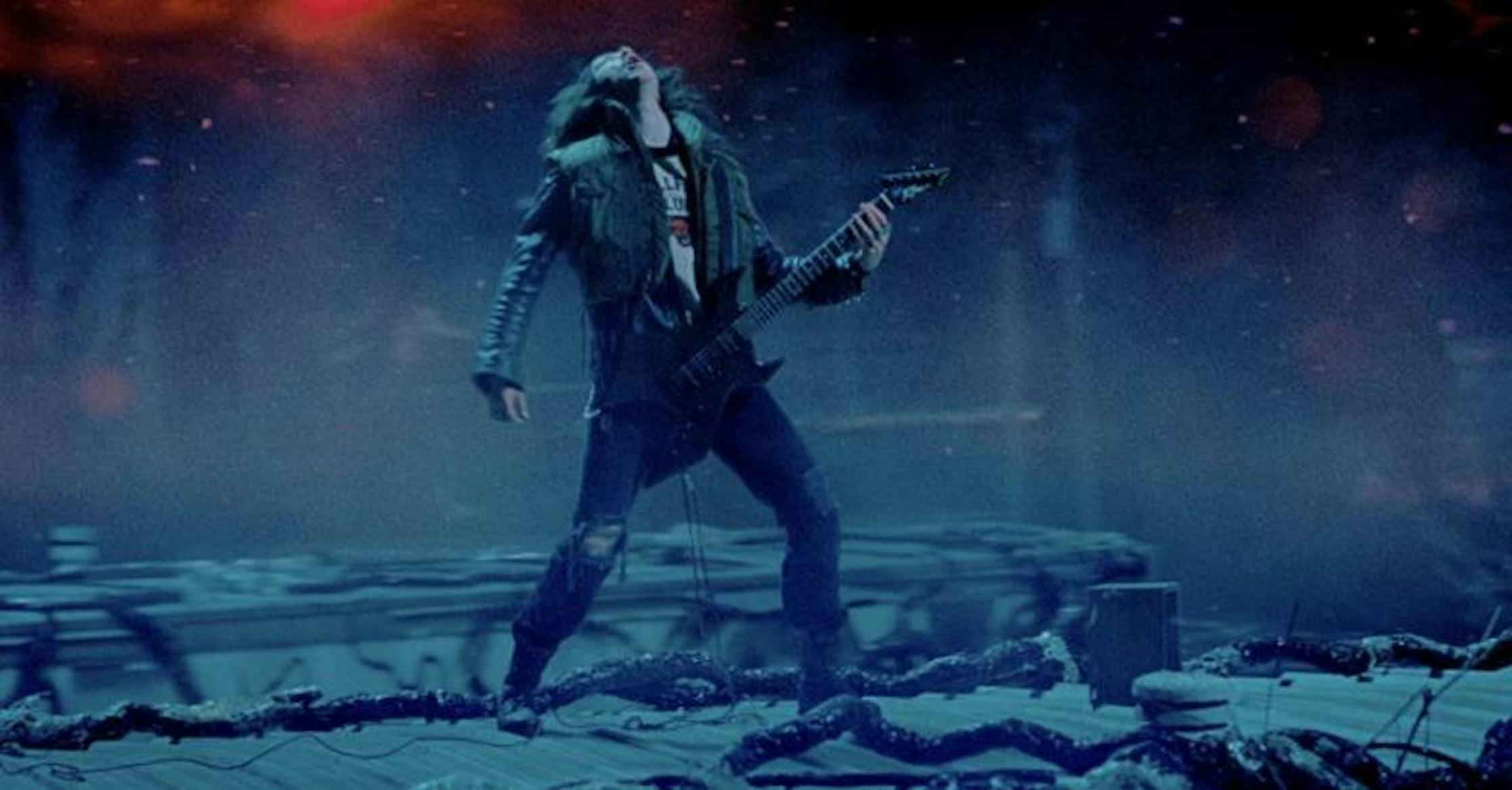
Eddie Munson played by Joseph Quinn performing Master of Puppets by Metallica in Stranger Things | Courtesy of Netflix © 2022
On top of its vast catalog of licensed music, the show also boasts an incredible score written by Kyle Dixon and Michael Stein of the band Survive. Their mix of synthesizers and inspiration from 1980s artists and film composers gives the show an unreplicated aesthetic. Standout tracks include “Kids”, “The Upside Down”, “Eulogy”, “The First I Love You”, and of course the main theme “Stranger Things” which got them the Primetime Emmy Award for Outstanding Original Main Title Theme Music in 2017.
The impact of the music in the show goes far beyond what we see on screen, it also causes real shifts in listening trends and chart-topping songs. As one of the most iconic songs of the series, Kate Bush’s “Running Up that Hill,” came back into the spotlight 37 years after it was released, becoming the most streamed song on Spotify in the US and UK at the time of season four’s release. The extreme success of "Running Up That Hill" also led to the show being able to play not one but two songs by the notoriously hard to get Prince. The songs “When Doves Cry” and “Purple Rain” serve as the background for climactic scenes in the series finale. In what Spotify deems “The Stranger Things Finale Effect,” streams of “Purple Rain” increased 608% globally, “When Doves Cry” by 336% and Prince’s overall catalog by 190%. Also attributed to this effect, streams of Landslide, by Fleetwood Mac increased by 31% and landed spot 41 of Billboard Top 100, the first time it had reached the top 100 over 50 years after its release. Also on Billboard’s rankings, this time on the Global 200 list, Stranger Things actor Joe Keery, under the stage name Djo, had his song “End of Beginning” reach the number one spot for the first time, dethroning music juggernaut Taylor Swift’s track “The Fate of Ophelia.”
Stranger Things acts as a love letter to 80s culture, allowing the Duffer Brothers to share parts of their childhood with younger generations. When talking about songs getting popular from shows, I often hear people complaining about “posers” liking their music. Although I can understand the argument, I feel like “gatekeeping” music is the worst thing you can do for an artist, as it just limits more people from becoming fans. As for my music taste, I feel like the show has served as a gateway into getting into different genres I might not have been as motivated to listen to otherwise. As the show states, music is a powerful tool and can reach emotions normal words can’t. It’s vital to understand and appreciate how music, even as a background element, can be crucial in the overall experience of viewing the media we all love.