
Looking back at love songs of years past, there is a stark contrast between how they are written throughout the decades. However, one thing that has stayed the same is the dominance of happy songs highlighting the brighter sides of romance. Whether its rock n’ roll from the 50s or emerging hip-hop from the 80s, they tend to stray away from the sad and dreary. When comparing these to the love songs from today, we see a much heavier focus on breakups, toxic relationships and hopeless romance.
This is especially prevalent in music consumed by young people. Artists like Billie Eilish, Taylor Swift, Clairo, and Laufey dominate the charts with their dreary styles. All of these artists tell stories of the experiences they’ve had with love, yet at the end of the day they always land on similarly sad tales. Looking at Laufey, she has created an entire musical brand of songs for lover girls or hopeless romantics. Many developing artists such as Natalie Jinju and aron! also follow this pattern.
Even outside of modern music there has been a trend of these love songs coming back into the public eye. Most notably has been the staple track for yearners, “Lover, You Should Have Come Over” by Jeff Buckley. This song released in 1994 but only recently in January of this year reached the Billboard Top 100 almost 30 years after Buckley passed. But why is it that popular love songs are sadder than ever and yearning is at an all-time high?
The decreasing joy in love songs may just be in line with music getting sadder over time. In an interview with Esquire, Dr. Michael Bonshor , a music psychologist, points out two main criteria of sad songs are the low tempo and the use of a minor key. Comparing that to a graph of tempo and use of minor vs major keys over time, there is a noticeable decrease in tempo and increase in use of minor keys since the turn of the century. This, however, still doesn't answer the question of why?
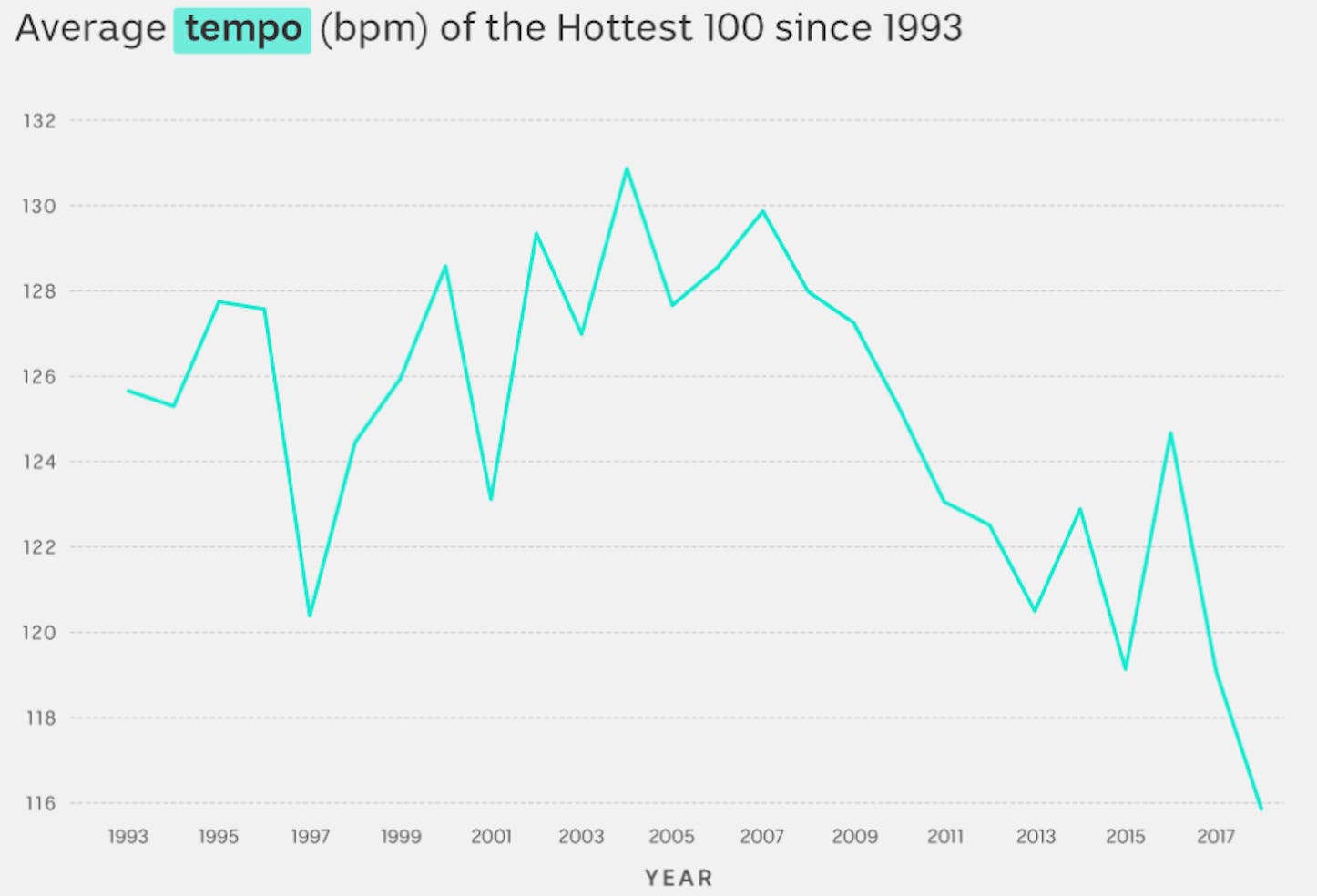
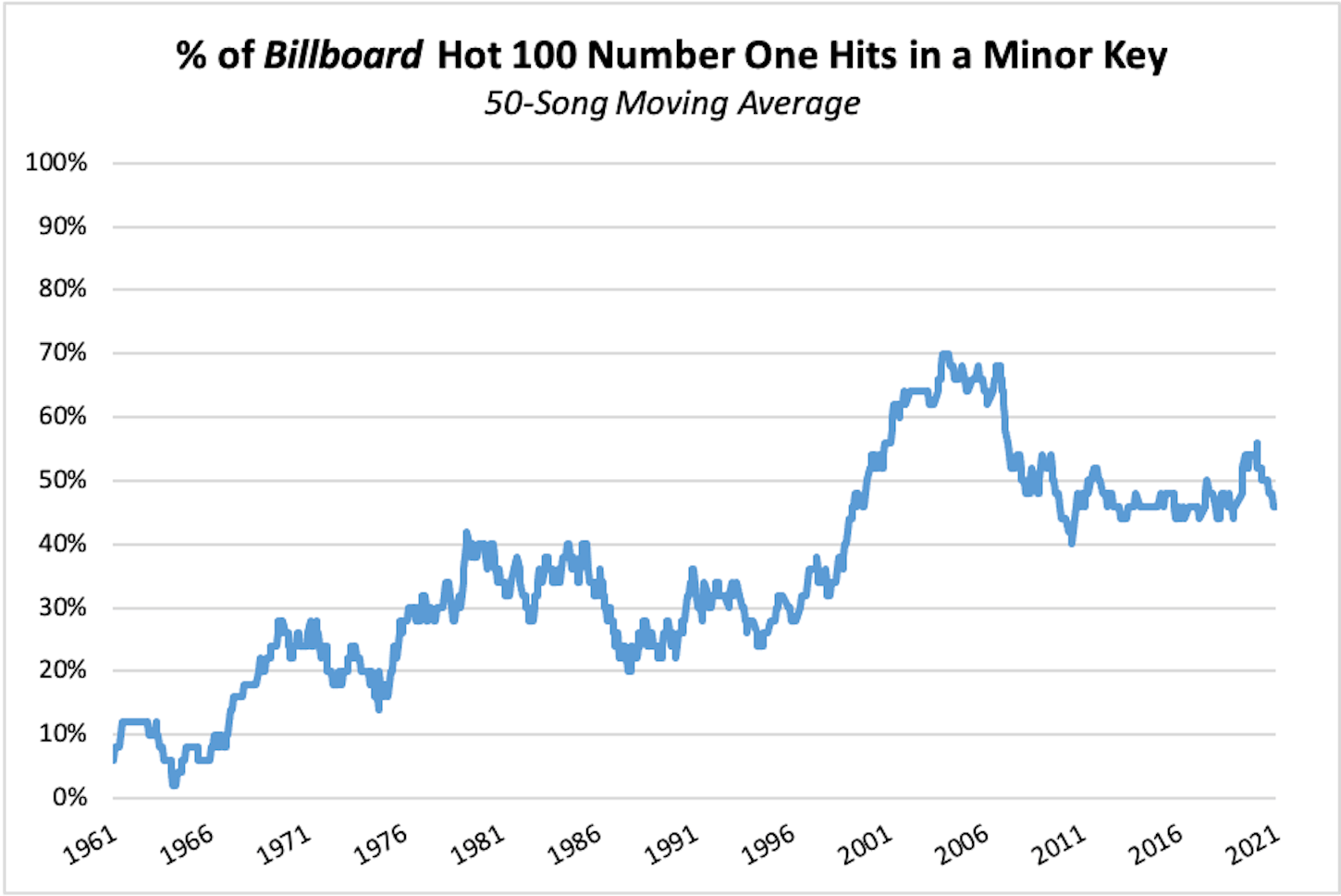
Many people theorize that through the years society goes through “hot” and “cold” patches. Cool patches are times of tolerance, humor, peace, and love. Hot patches, which many think he have been in since 9/11, are times of repression, violence, and pessimism. If beliefs are true and we are in a “hot patch” it makes complete sense that sad songs are dominating the charts. The timeline also lines up with the rise of the internet, which many have said has led to many young people becoming (or at least acting) sadder.
With the social media boom of the past decade, people are comparing themselves to others and communicating at a mass scale more than ever. This was especially prevalent on the site Tumblr in the early 2010s. Typically used as a place to vent, teens would lay their issues out for anyone to see in fancy poetic phrase. Despite this seeming like a healthy way to express oneself, it soon led to an increase in people romanticizing mental illness and emotional struggles. Found by Her Campus, a recent Tumblr quote reads, “I really wanna be a mysterious character with a tragic backstory. It sounds so much cooler than the reality of being me.” It seems young people have developed a sort of desire to be sad in an attempt to seem more interesting, or with what we see in music and art, more aligned with the struggling artist archetype. Although this can be harmful to ones development, it can also be helpful in alleviating hard emotions.
Of course wallowing further in your own self-pity isn’t going to improve your mood, but a healthy dose of allowing yourself feel sad can be great to work through tough emotions. Many psychologists believe that listening to sad music while sad is motivated by a desire for self-verification. Knowing your true self is the best way to start dealing with issues, and for many people listening to sad music helps them verify their current state of being, leading to a better understanding of their situation. It can also help listeners enter flow, or a sense of being in the zone, a total focus on a subject can sometimes allow feelings to not take center stage and let the music itself be the focus.
So all in all, the reason love songs are sadder than ever, is because we as people are sadder than ever. The current state of the world facilitates low moods rather than happiness, and through a desire to cope with ones feelings, sad songs are topping the charts all around. It’s not all doom and gloom though, as times past have proved, the hot patches all eventually lead to cold patches, and letting yourself feel sad might be the best way to feel better. If happy music is more your style, there are still plenty of artists writing uplifting love songs, like rising star Olivia Dean or Sabrina Carpenter. Or, of course, you could always turn back the clock to the 80s where upbeat love songs were all the rage.

