
Dream pop, new wave, R&B, country, 80’s pop and classic rock all seem to have a place somewhere in the Houston artist’s latest album. But Love Spells is hesitant to let any single genre define the project.
“I actually don’t like when people call my music R&B,” he said during our interview before his Atlanta date. I compared it more to something like dream pop or new wave pop with some country, but he seemed averse to any genre labels being used.
That resistance to genre became a central theme of our conversation before his show at the Bon House. I approached the interview expecting to talk about influences and production on his debut, but the conversation kept circling back to the more fundamental ideal in how those influences become part of an artist’s identity without becoming a blueprint in the studio.
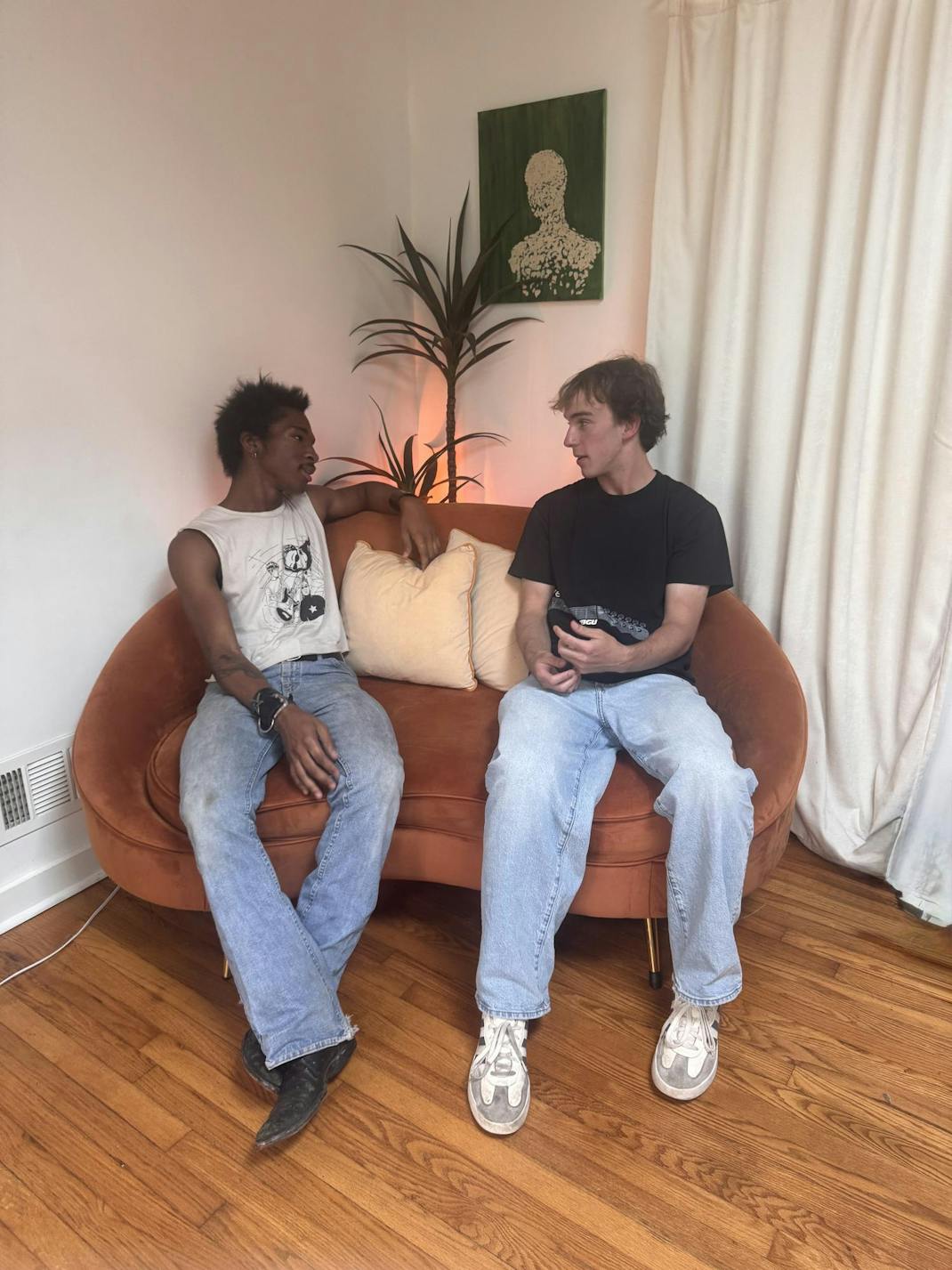
Love Spells grew up in Houston listening to R&B and Southern hip-hop, naming UGK, Outkast, Paul Wall, Alicia Keys and Beyoncé among his early influences. His listening habits have since expanded considerably. He says country is currently the genre he listens to most, though his version of country is more progressive, including Townes Van Zandt, George Jones, Karen Dalton, Jackson C. Frank, Bob Dylan and Tim Buckley (a personal favorite of mine) versus what a lot of country music looks like today commercially. His personal favorite recently was Emma Ogier and Todd Crozier when I asked about up and coming artists.
That eclecticism is reflected throughout Love Is the Law. Love Spells says he is not thinking about genre when he writes. Instead, he wants to make something “more all-encompassing,” rather than music that is solely about himself… a chapter is how I took it. That shift is particularly noticeable when comparing the album to his earlier Lovers Only era. On Love Is the Law, he wanted to explore something more universal and, as he described it, “more otherworldly.” The turning point came while recording “Keep It to Yourself,” the final song made for the album.
“I was like, wow. I need to start using this tone more,” he said.
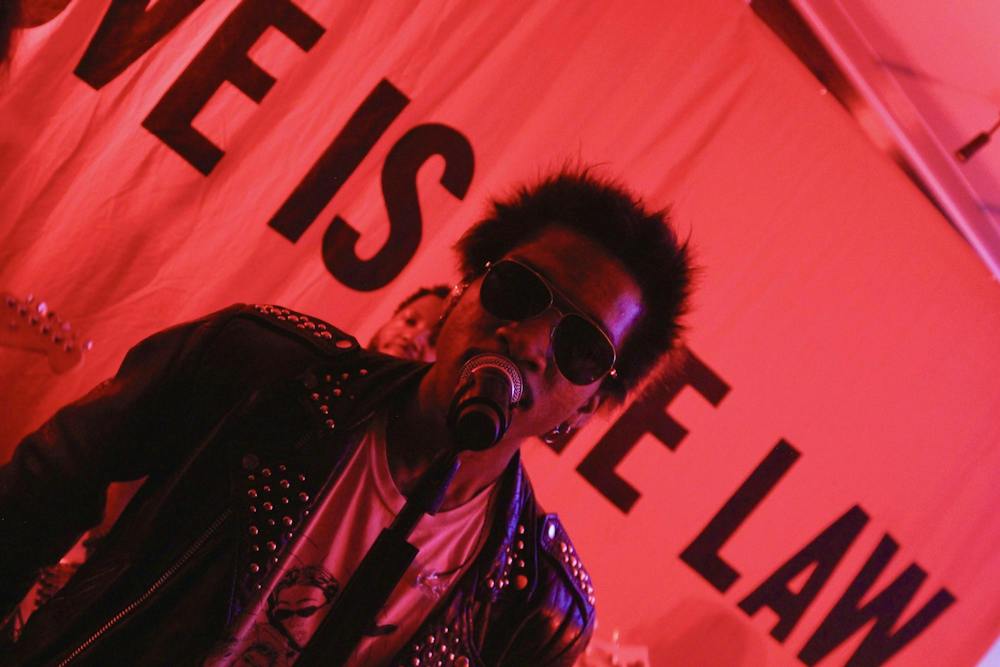
That song was also one of the immediate highlights of the Bon House set. The intimate house venue setup made the performance feel less like a traditional concert and more like being let into Love Spells’ vision and brand. “Lovers Only,” “Love Costs,” “Keep It to Yourself,” “Heart for Eyes” and “Stupid” moved through the set, balancing the softer, dreamier moments of the record with the more energetic side of his live presence in the solo and bridge of “Keep It to Yourself,” my favorite from the night, showcasing his vocal range. Prince and George Michael are two of the more obvious touchstones in that sound. Love Spells pointed to Prince’s For You for its acoustic textures and vocal tones, while Faith became another influence toward the end of the album’s creation and during the music-video process, especially present on the back half of the “Don’t Touch” video.
Then there is Bruce Springsteen in Love Spells’ realm of influences.
Springsteen might seem like an unlikely influence for Love Spells an artist whose music is so frequently categorized as R&B. For Love Spells though, Born in the U.S.A. was one of the album’s biggest references.
“I love how it made me tap my foot,” he said. “It made me feel like I was back in Texas a lot.”

The connection becomes most direct on “Love Is the Law,” the album’s title track, which Love Spells said was specifically inspired by Springsteen. Hearing that explanation and then watching the show that same night gave the influence a different context, focusing more on the movement and excitement rather than the tone or sound. The songs had a physical momentum drive that became more apparent live, especially in a room as small as the Bon House. By the end of the set, that energy had completely broken down the separation between performer and audience (which the lack of an elevated stage helped with). Love Spells left the stage and went into the crowd and hugged some fans for the final song, “Wish I Don’t Love You,” turning what had already felt like an intimate performance even more personal.
It was fitting for an artist who repeatedly pushed back against the idea of putting his music into a box.
Love Spells also spoke about the way Black artists with soulful voices can be automatically placed into R&B or alternative categories instead of pop when their music moves beyond those boundaries. To him, those labels can influence where music gets heard and who gets the chance to discover it. That matters even more in an era where listeners can discover and abandon a song almost instantly as listeners can get a song in half a second, yet can also click off in half a second, making that hook more hyper focused than ever before in this age.
For Love Spells, the answer does not seem to be chasing a particular genre or formula. Love Is the Law pulls from decades of music, film (we had a great talk about his favorite romance movie inspiration, When Harry Met Sally which he’d seen over 100 times) and culture while allowing those influences to become something distinctly impacted on his own brand and style. By the time he stepped into the crowd for the final song, the Springsteen connection felt less like a piece of trivia you’d pick up on his second Instagram account and more like a key to understanding the album. Not specifically in the sound influence of Springsteen, but the feeling of being moved by a song.
And for Love Spells, the live feeling perfectly captures the ambition of his newest album.

