
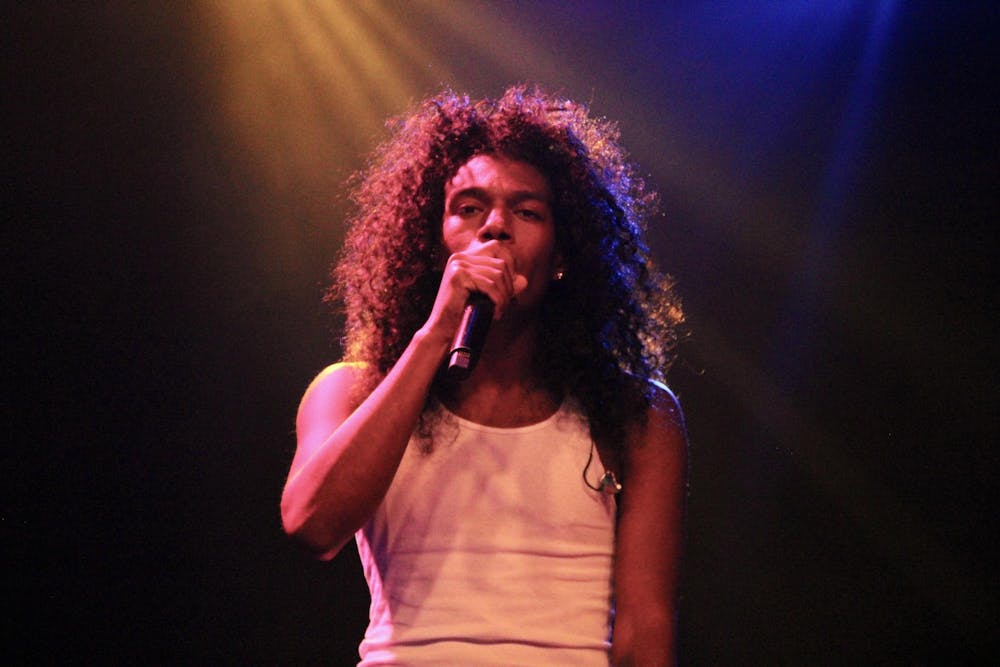
For years, being a Choker fan required patience. After building a strong following with "Peak", "Honeybloom", and a trio of experimental EPs through 2019, the alternative R&B artist largely disappeared from the spotlight. While comparisons to Frank Ocean followed him from the beginning, Choker's appeal has always come from the unpredictable nature of his sound. His songs rarely follow expected structures, his production often feels intentionally unfinished or loose, and his lyrics come through in fragments that connect across songs. These choices are seen clearly now, as Choker returned with the release of “Heaven Ain't Sold” 7 years later this February, and Friday night's performance at The Masquerade's Hell venue felt like a celebration of that comeback fans were waiting for unwearyingly.
The night opened with a set from Arima Ederra, whose vocals reminded me of Amy Winehouse, with a dreamier blend of neo-soul and alternative R&B that proved to be a great preparation for the headline ahead. Her laid-back performance settled the crowd in with her driving harmonies before the room filled with eagerness for Choker's set.
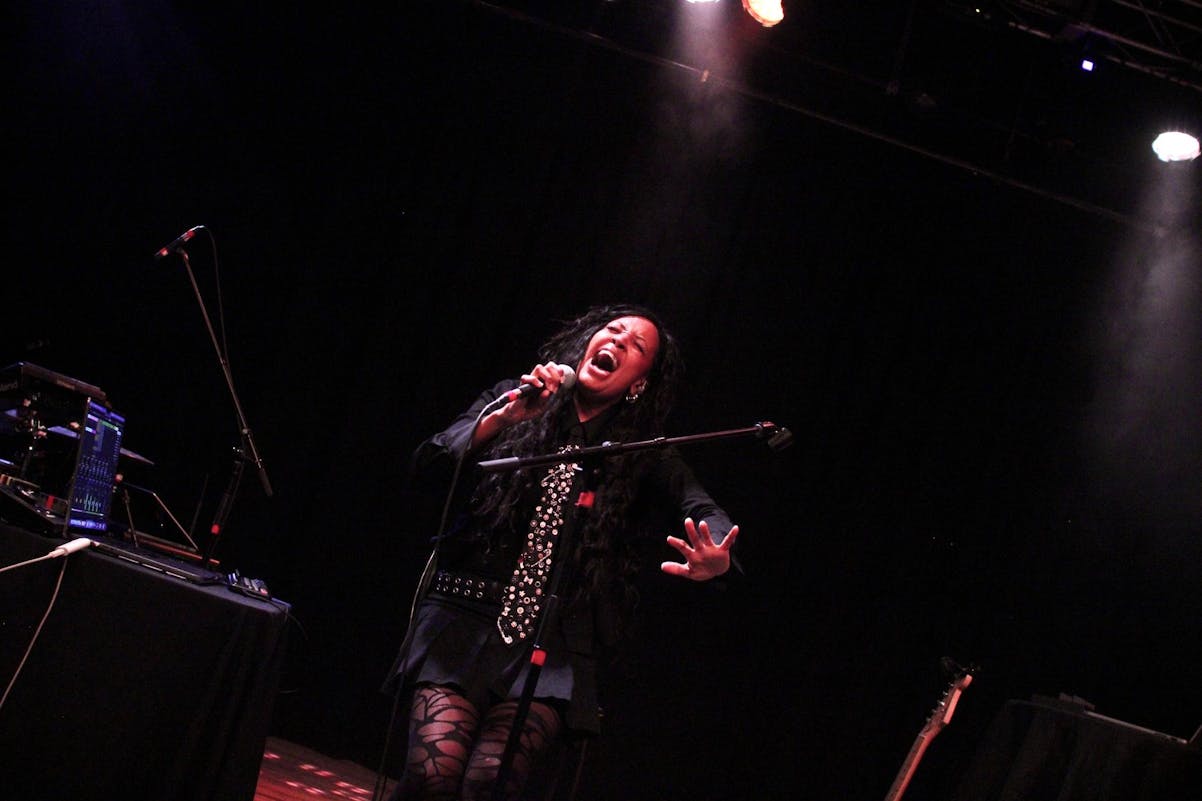
Arima opens for Choker at The Masquerade in ATL
Opening with "Angel Station," Choker immediately commanded the room without needing much more than his presence as he relied solely on the crowd’s devotion, not even singing for the first two minutes. His set focused heavily on tracks from “Heaven Ain't Sold”, with tracks like "Good," "Blue Sole," and "Uneven" taking on even more emotional weight when performed live with the sentiment in his vocals. The album's themes of self-doubt and grief echoed throughout the room, and the crowd responded with singing along to almost every word.
While Choker remained the focus, his band played a massive role in bringing the songs to life. Drummer Luke Titus was a standout all night, effortlessly shifting between tight grooves and explosive pockets that pushed songs like “Geppetto” and “Proof” forward. The keyboardist Rahm added more live depth throughout the set, but his highlight came during "Rae Town," when he switched out the keys for a flute, highlighting the pockets that the jam song has, underscored by his flute solo, which was one of the night’s most captivating moments. The crowd fell almost completely silent, soaking in the performance before erupting with applause at the end of the solo.
Classics and fan favorites like "Lucky," "El Dorado," and "Juno" brought some of the night's loudest reactions and singalongs with the audience eagerly filling in with choruses whether or not Choker stepped back from the microphone. Even in the packed room, the performance felt surprisingly intimate more than anything with the crowd harmonizing with Choker rather than yelling. There were no elaborate visuals or flashy production elements. Instead, Choker relied on his strong stage presence, heartfelt and genuine fan interactions during and between songs, and the connection his music has built with listeners over the years.
For an artist whose career has often been marked by unpredictability, Friday night's show was a reminder of what makes Choker so compelling. His music continues to exist in-between genres, social media trends, and expectations, making it special in his conviction and passion for his soundscape instead of chasing an arbitrary template or model since he took the path of an independent artist. As the final cries from the closer "Juno” rang out inside The Masquerade, it was clear that Atlanta wasn't just happy to see Choker back. They would be there for whatever path he pursues next.
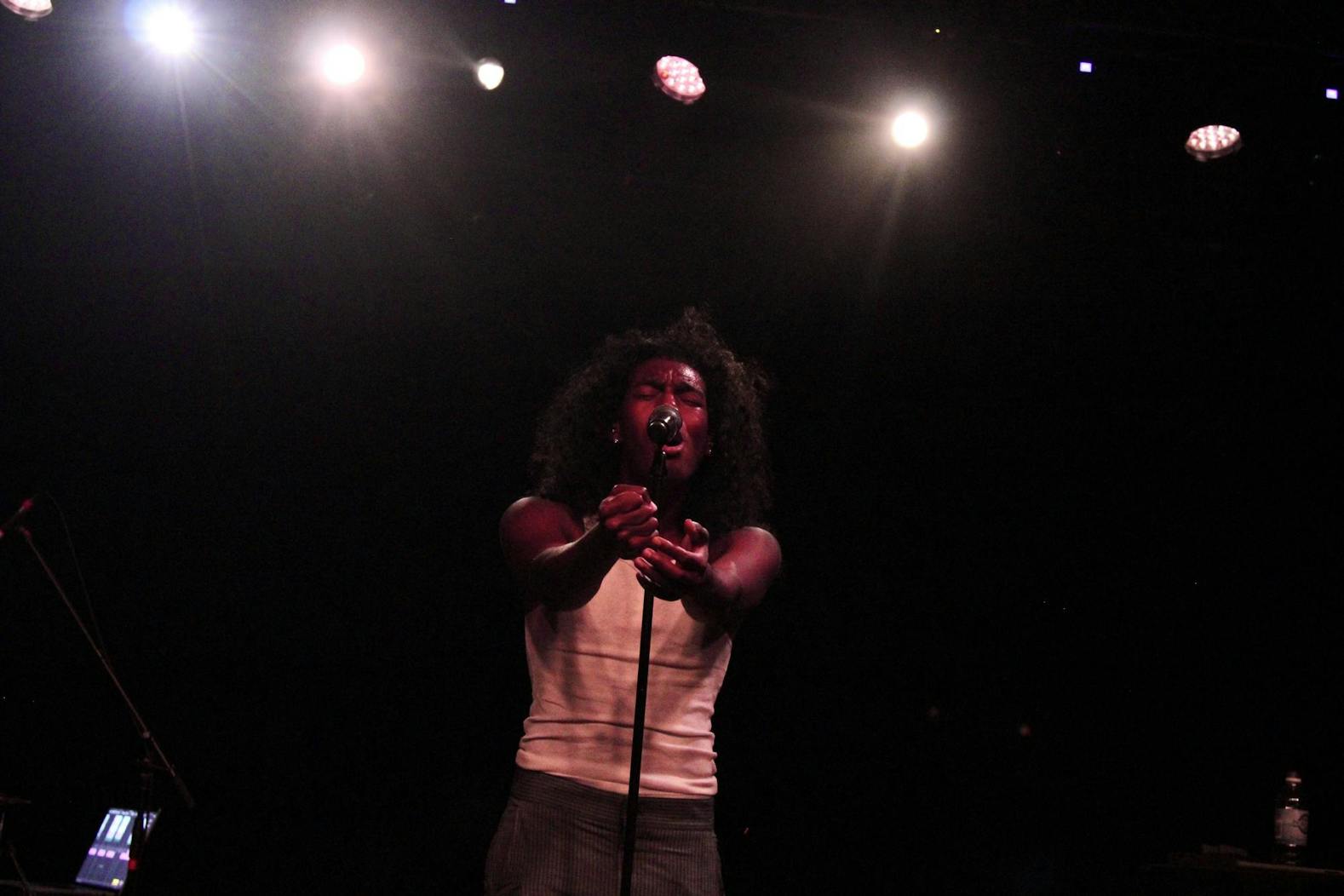
Choker perfroms at The Masquerade in ATL : Photo by Parker Causey
